Setting up your heat pump
- Keep radiators clear – to help heat circulate, make sure your radiators are free from clothes and furniture, and the valves are fully open (set to 5 or 6).
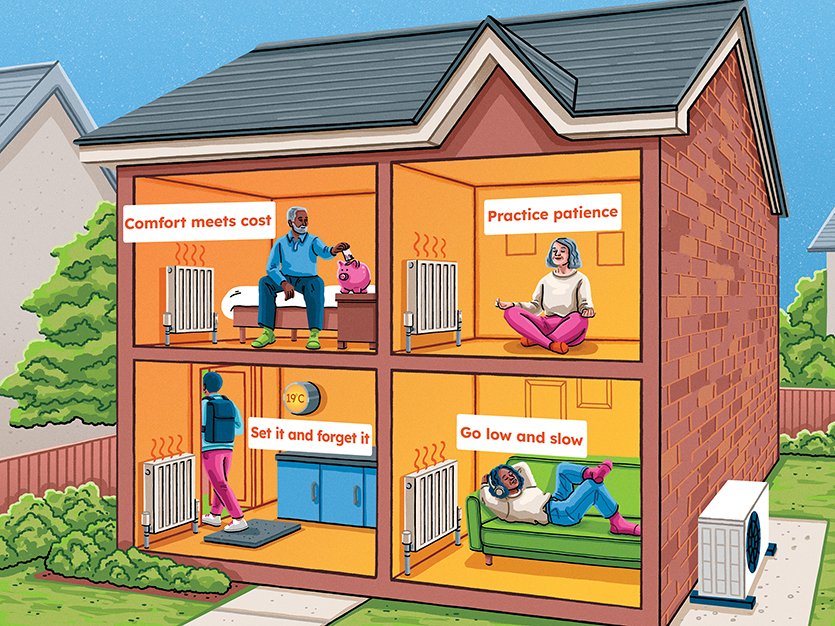
- Set it and forget it – your heating system works best when it’s left on. Make sure your heat pump is scheduled to stay on for most of the day and night.
- Heating or hot water? Just like a gas combi-boiler, a heat pump can’t warm both at once. Program your hot water to be topped up when you don’t need your heating on: such as when you’re in bed and under your duvet.
- Warm radiators work – don't be alarmed if your radiators aren’t burning hot like they used to be. They are meant to be lukewarm and steadily maintain your home's temperature.
Combining comfort and cost
- The Goldilocks zone – set your thermostat between 18 and 21°C, the sweet spot that’s ‘just right’ to maximise comfort and cost.
- Check your tariff – find out which electricity tariff you are currently on, and whether you are able to change to a cheaper one. There are some specific tariffs just for people using heat pumps.
- Go low and slow – heat pumps are designed to provide gentle, continuous warmth, keeping your home at a steady and comfortable temperature all day long.
- Practice patience – unlike a traditional boiler, a heat pump takes time to warm up or cool down, so you won't feel an immediate effect the moment you change the thermostat.
- A dry home is a cheap home – cold houses create damp, and damp houses are expensive to heat. Keeping your home warm also keeps it dry and makes it much more efficient to run.
- Give your house a burp – about 90% of your home’s heat is stored in its walls and furniture, rather than the air. This means you can open your windows for 10 to 15 minutes of fresh air – without losing all your warmth.
Confused? Or perhaps your heat pump isn’t working as it should? Head over to our help with heat pumps page to find out how to get your problem sorted.